



When discussing a laser machine, power, precision, and compatible materials are often the first criteria mentioned. However, the laser class is equally important. It does not describe the machine’s performance but rather the level of risk associated with the laser radiation it emits.
Laser classification is based on strict international standards. Its goal is to protect users and anyone present in the working environment. More broadly, this classification governs the use of laser sources in professional, educational, or domestic settings.
It therefore determines the safety measures to implement: wearing protective gear, gloves, glasses, signage, operator training, etc.

What is laser classification?
Laser classification is a standardized system that groups lasers into different classes according to their potential hazard to the eyes and skin. This hazard mainly depends on the wavelength, emitted power, and possible exposure duration.
The class of a laser engraver is not solely related to its raw power expressed in watts. A low-power laser can pose a high risk if directly accessible, while a more powerful laser may be classified differently if it is completely enclosed within a system.
International standards, widely adopted in Europe, currently define several classes, ranging from lasers considered safe to high-risk industrial lasers.
| Laser Class | Risk | Safety Measures | Application Examples |
|---|---|---|---|
| Class 1 | Safe to the naked eye, no risk | Full beam confinement, no specific protection | Educational or beginner use |
| Class 2 | Low risk, natural blink reflex protects | Avoid prolonged exposure, supervision recommended | Laser alignment or aiming devices |
| Class 3 | Hazardous to eyes, direct exposure critical | Appropriate goggles, signage, restricted access | Semi-open machines for trained operators |
| Class 4 | Very hazardous to eyes and skin, fire risk | Secured areas, interlocks, ventilation, advanced training | Heavy industrial laser engraving and cutting applications |
Class 1: intrinsically safe laser
Class 1 lasers are considered safe under normal operating conditions. The laser radiation is either inaccessible or remains below the dangerous thresholds for eyes and skin.
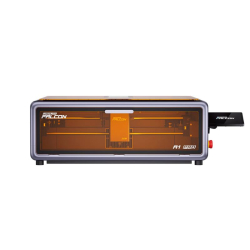
In engraving and cutting, this class generally corresponds to fully enclosed systems. The laser beam is confined inside a housing, with safety mechanisms that prevent emission when the cover is open.
For the user, this means no specific eye protection is required during normal operation. It is the most reassuring class in terms of safety, especially in shared or educational environments.
Class 1M or 1C: variants to know
Class 1M includes an important nuance. The laser is safe as long as magnifying optical instruments (such as magnifying glasses or lenses) are not used to observe the beam.
In laser equipment, this class is rarer and reminds us of a basic principle of laser safety: risks can change depending on how the radiation is observed or handled.
There is also a variant called class 1C, which applies to certain laser systems integrated into medical or industrial devices. It provides a high level of safety while remaining accessible under controlled usage conditions.

Class 2: visible low-risk laser
Class 2 lasers emit in the visible range. Their power is limited so that the natural eye-blink reflex provides sufficient protection during very brief accidental exposure.
However, this does not mean they are completely safe. Intentional or prolonged exposure can cause eye injuries. In laser engraving, this class mainly concerns alignment or aiming devices rather than cutting systems.
Class 2M: beware of optical instruments
As with class 1M, class 2M introduces additional risk when observing the beam through magnifying optics. To the naked eye and under normal conditions, the laser remains relatively safe.
This class is uncommon in laser machine applications but illustrates the importance of understanding the actual usage context of equipment.
Class 3 lasers: a risk level not to underestimate
Class 3 lasers represent a higher level of risk and are divided into two categories: class 3R and class 3B. They have specific safety requirements for both the user and the working environment.
Class 3R: a critical threshold
Class 3R marks an important transition in laser classification. The radiation becomes potentially dangerous to the eyes even during short exposures, although the risk is lower than for higher classes.
Safety measures begin to be required: signage, basic user training, and limiting access to the beam. This class may involve open or semi-open systems, often used by trained operators.
Class 3B: strict usage rules
Class 3B lasers present a real danger to the eyes and, in some cases, the skin. Direct exposure to the beam can cause severe and immediate injuries.
In a workshop, a laser engraver of this class requires strict rules: wearing appropriate protective goggles for the wavelength, controlling reflections, and maintaining a controlled working environment.
Class 4 lasers: the highest risk level
Class 4 includes the most powerful lasers. They are hazardous to the eyes and skin, even in diffuse exposure, and also present a fire risk.
In laser cutting, this class is often associated with heavy industrial applications.
Using them requires advanced safety protocols: controlled areas, interlocks, fume extraction, and thorough operator training.
Laser class and equipment: a relationship to understand
It is essential to distinguish laser power from its class. A machine can have a class 4 source while being globally classified as class 1 due to total beam confinement.
This point is often misunderstood. The laser class indicated by the manufacturer corresponds to the risk level for the end user, not the intrinsic class of the laser source alone.
Regulatory implications of laser classification
Laser classification is not just a theoretical concept. It fits into a precise regulatory framework, especially regarding health and safety at work.
- – training operators in laser safety,
- – providing personal protective equipment,
- – proper signage,
- – restricting access to certain areas.
Which laser class for education?
In educational environments, whether schools, high schools, or higher education institutions, user safety remains the top priority. Choosing the appropriate laser class is therefore critical to limit risks while enabling practical and effective learning.
For students or beginners, class 1 systems are generally recommended. These machines are fully safe due to total beam confinement and pose no danger to eyes or skin under normal operating conditions. They allow teachers and students to focus on learning laser techniques without additional safety complexities.
Variants 1M or 1C can also be used in certain contexts, provided supervision is attentive and usage rules are clearly followed.

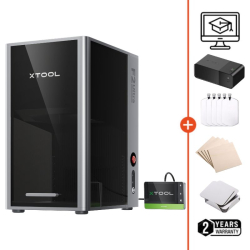
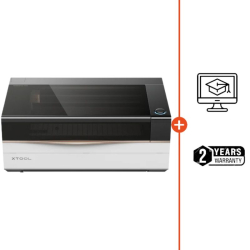
Check out our selection of Class 1 laser engravers for safe and worry-free use.
Laser safety: best practices beyond class
Even with well-classified equipment, laser safety also relies on daily practices. Proper ventilation, regular maintenance, following usage procedures, and attention to the materials used are all key factors.
Laser classification provides a framework but does not replace technical common sense. An experienced user knows that safety is a coherent system, not just a label on a machine.
Choosing according to your use
Understanding the laser class helps make an informed choice. For educational or shared use, a class 1 machine is often preferred for its simplicity and safety level.
Conversely, in demanding professional settings, higher classes can be considered, provided the associated safety requirements are fully controlled.
Conclusion: laser class as an essential guide
Laser class is more than a technical detail. It structures usage, safety, and integration of equipment and laser machines. Understanding laser classification and its implications brings peace of mind, efficiency, and professionalism.
If you want to learn more about laser classification or have questions about the safety and use of our equipment, feel free to contact us. Our team of experts will be happy to advise you.
✅ Why Choose Polyfab3D?
Premium Support and After-Sales Service: Starting from your needs, we will guide you to the most suitable solution and provide long-term support for its implementation and daily use.
Official Reseller: Polyfab3D is a certified reseller of top brands, ensuring you get official products, exclusive access to the latest innovations, and priority technical support.
Fast Delivery and Customer Satisfaction: Polyfab3D is committed to providing you with an optimal and fast experience. Positive feedback from our customers rewards us and proves the reliability and efficiency of our service.
Contact us now for a personalized recommendation tailored to your needs, budget, and ambitions.