- 👨🔧 Premium After-sale service
- Free delivery from €39.90
- Return under 14 days
- Customer service
-



- 🎯 Services dedicated to professionals
- 📦 Stock in Europe
- 🚚 Ships within 24 hours
- 🔐 Secure payments
- 🔙 14-day return
Filament PC (Polycarbonate)
Active filters
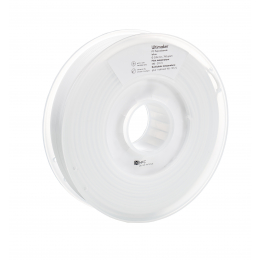
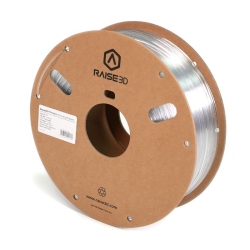
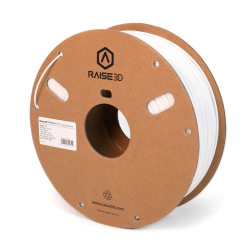
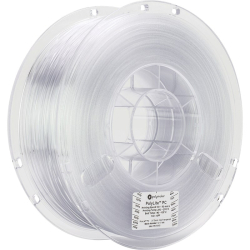
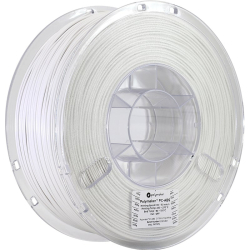
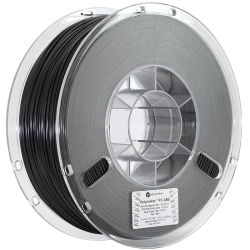
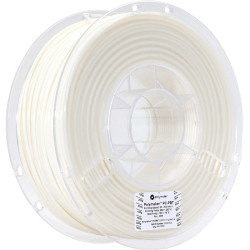
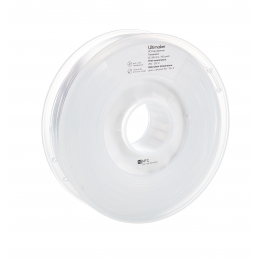
- Made In France
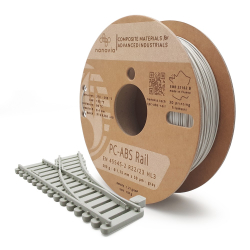
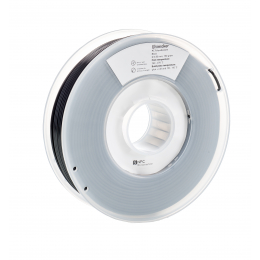
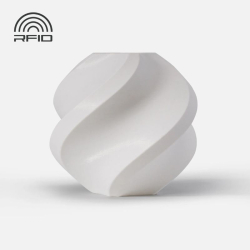
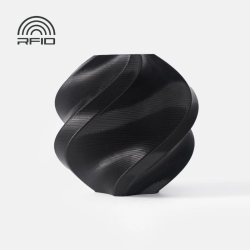
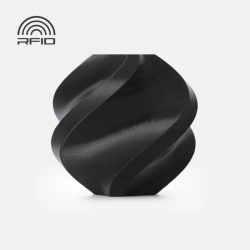
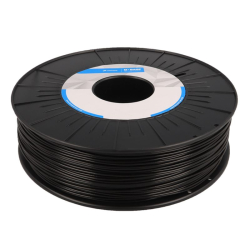
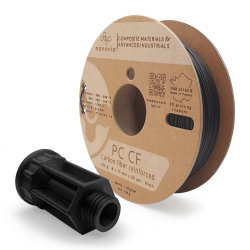
Filament PC (Polycarbonate)
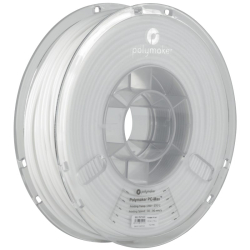
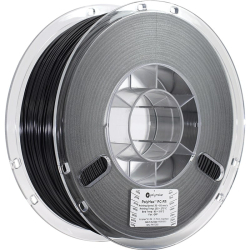
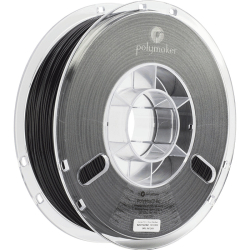
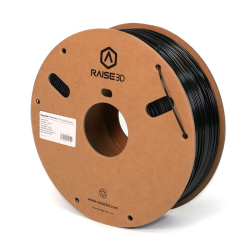
Polycarbonate PC is the best-performing thermoplastic compatible with professional desktop printers. Both mechanically and thermally, it offers excellent overall resistance. Rigid and solid, resistant to impact and bending, and capable of holding its own over temperature ranges from -30°C to +120°C, this polycarbonate filament is technical and functional. Better known as Makrolon or Lexan, its high impact resistance is usually found in helmets and police shields, but also in furniture and smartphone covers, for example. For its optical performance, in the manufacture of optical glass, camera lenses (infrared cameras) and automotive headlight glass. By default, the natural versions of PC filament provide the most translucency of all 3D printing materials. Sensitive to chemical agents and ultraviolet rays, however, this limits its use.
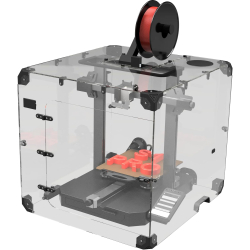
From a 3D printing point of view, this amorphous material is complex, requiring the use of high extrusion temperatures (>280°C) and ideally a 3D printer with a closed or heated enclosure. Plate adhesion and interlayer bonding will not be possible without special attention. The use of a specific adhesion solution such as Magigoo PC glue or Ultimaker adhesion sheets is essential. For larger projects, the addition of a printing raft is even recommended. As far as the interlayer bond is concerned, FDM technology means that this can quickly become a problem on medium to large part formats, so we recommend that you start with 3D objects no larger than a few cubic centimetres. Polycarbonate filament is available for purchase by everyone, but is reserved for the most powerful professional desktop printers and for experienced users.
How to choose your reel of PC?
Depending on your needs and expectations, you will need to select either a natural translucent version (the most complex and efficient) or a pigmented version. If the power of your 3D printer is limited or you want to work on a larger format, you may prefer the Polylite PC version of Polymaker for its translucency or an alloy such as Forshape PC - ABS for an excellent performance/printability compromise. If you're looking for maximum mechanical performance, you'll be better off with the Polymax versions of Polymaker.
Our range also includes flame-retardant versions and versions with better chemical resistance.
Why choose polycarbonate for 3D printing?
The use of this technical material in FDM is not the easiest, and it is generally recommended to use it when the other alternatives (PC-ABS or PETG HT) do not work.
As a reminder, the strong points of this material - translucency and impact resistance - are closely linked to your 3D model (thickness, filling, shape, etc.) and to the inter-layer bond you manage to create. The only point unmatched by most other 3D printing thermoplastics is its high temperature resistance.